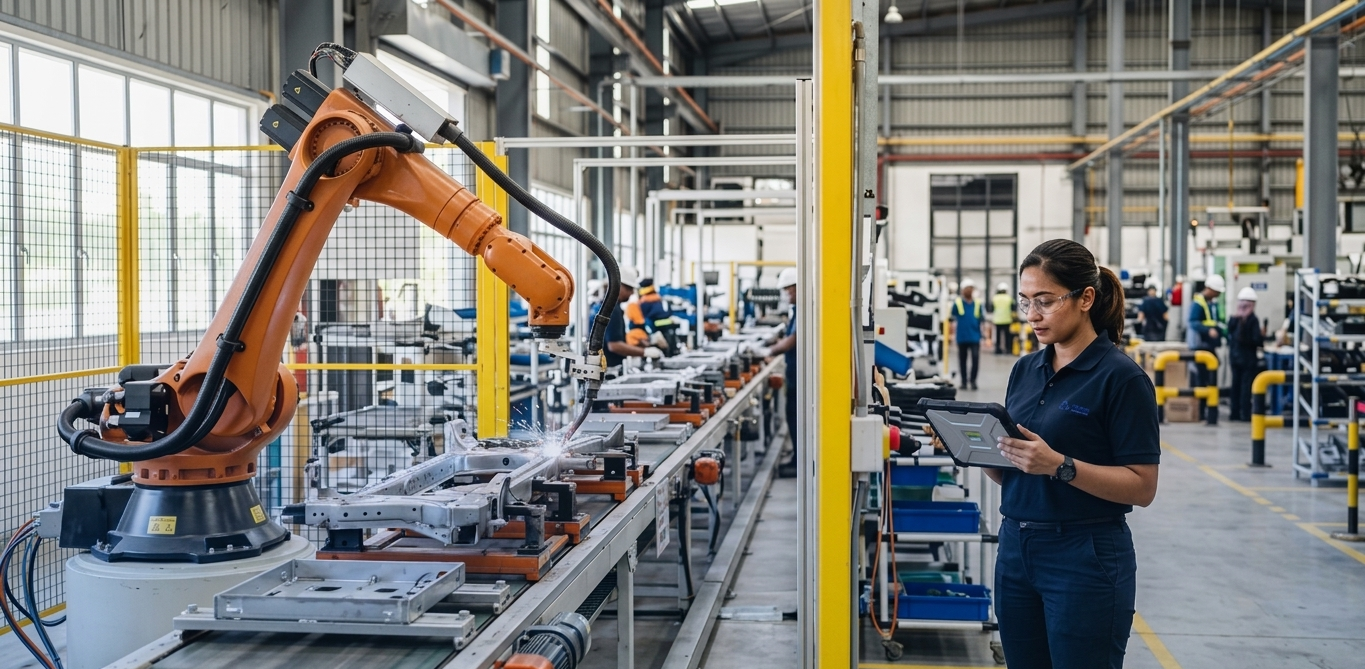
Malaysian mid-sized manufacturers are facing a compound risk. Especially if they are managing purchase orders manually, tracking supplier lead times informally, and storing procurement records across email threads and spreadsheets. It may not even look like a prominent blockage now, but it imposes an imminent disruption when a production line is waiting, and materials have not arrived. A structured procurement management system solves this by simplifying the entire process. It empowers businesses by replacing fragmented manual processes with a single, connected workflow that gives procurement and production teams visibility over the same live data. This article explains what that looks like in practice, how Tyeda's Procurement Management module is built to deliver it, and why it matters now.
Why Procurement Delays Disrupt Production in Malaysian Mid-Sized Businesses
Research indicates that professionals spend up to 50% of their time on procurement management on transactional activities (Planergy, 2025) such as manual workflows, data silos and fixing spreadsheet errors rather than relying on automated, connected systems. The reason is the way procurement information is managed.
SMEs face significant challenges in accurately forecasting inventory, leading to overstocking or stockouts that directly affect their ability to meet customer demand (Deloitte Insights, 2025). Purchase order management is done manually on spreadsheets or via email. Supplier lead times exist in someone's memory or a folder nobody consistently updates. Goods receipt is confirmed through a messaging app, and inventory is adjusted manually, often hours after materials have reached the floor.
When procurement data does not flow in real time into production planning, the forecasting gap widens, and the factory floor pays for it with halted lines, emergency purchasing and procurement delays. A connected procurement system closes this gap by replacing manual entry and informal communication with a single automated workflow, giving production planning teams accurate, real-time data to act on, not assumptions built on yesterday's numbers.
Manual Purchase Order Management Leaves Malaysian Manufacturers Scheduling on Incomplete Data
For Malaysian manufacturers, purchase order tracking is not an administrative function. It is a production continuity function. Nearly 72% of manufacturers discovered a material shortage only after production delays were already unavoidable (Wakefield Research, 2026), and emergency procurement to recover ultimately leads to premium pricing.
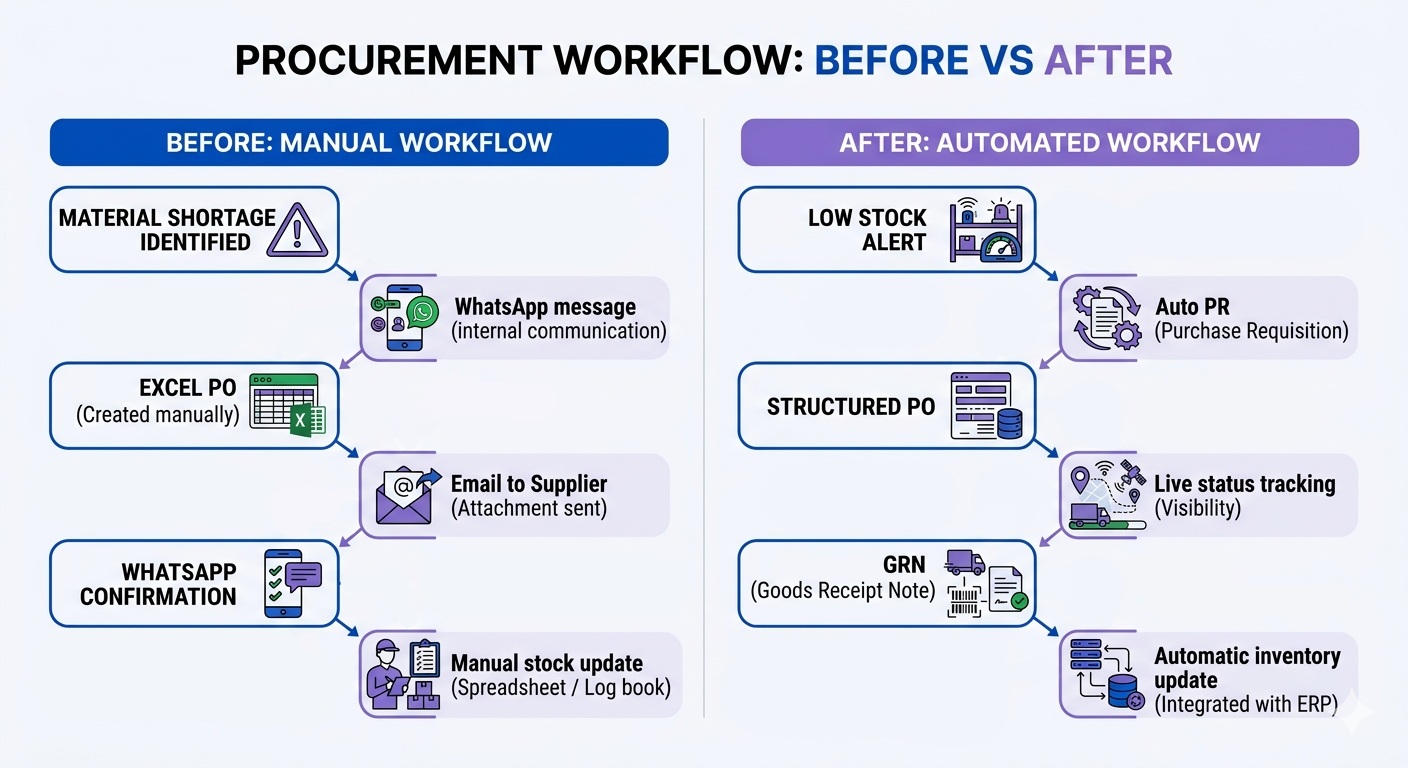
The reason this happens is structural. A planner identifies a material shortage often when stock has already run low. A requisition is communicated informally, an order is placed via email or WhatsApp, and from that point, the status lives in a chat thread or a mental note. Without structured purchase order (PO) creation and tracking in manufacturing, there is no live visibility into what has been ordered, what is in transit and what has been received and verified. When disputes arise with suppliers, there is no audit trail because purchasing records were never formally linked (Ironclad, 2025).
The result is a production planning function running on assumptions rather than confirmed data. Replacing manual PO management with a structured one solves this by connecting every requisition, order and goods receipt in one live system, so procurement status is always visible to the production team, and every transaction carries a complete, timestamped record.
When Supplier Relationships Are Built on Familiarity, Performance Issues Stay Hidden
Even if your business purchase orders are raised and tracked, a deeper gap remains if it relies on supplier management on familiarity rather than evidence. The same suppliers get reordered from because they are known, not because their performance has been measured. No lead time benchmarks. No on-time delivery rate tracked across orders. No objective basis for comparing suppliers when quality or delivery issues arise.
While relying on trusted suppliers is common practice, businesses need to ensure those relationships are not quietly costing them. Without supplier performance analytics in place, consistently low delivery rates never surface as a pattern. A supplier delivering late on 40% of orders looks identical to one delivering on time 95% of the time, because both exist only as a name in a contact list, making what feels like a relationship problem, in reality, a data problem.
The shift from reactive to proactive supplier management in manufacturing SMEs begins when the on-time delivery rate and average delivery time are calculated automatically from every completed transaction, giving procurement teams a current, objective picture of each supplier's reliability without waiting for a quarterly review.
A Disconnected Procurement Workflow Holds Back Operations
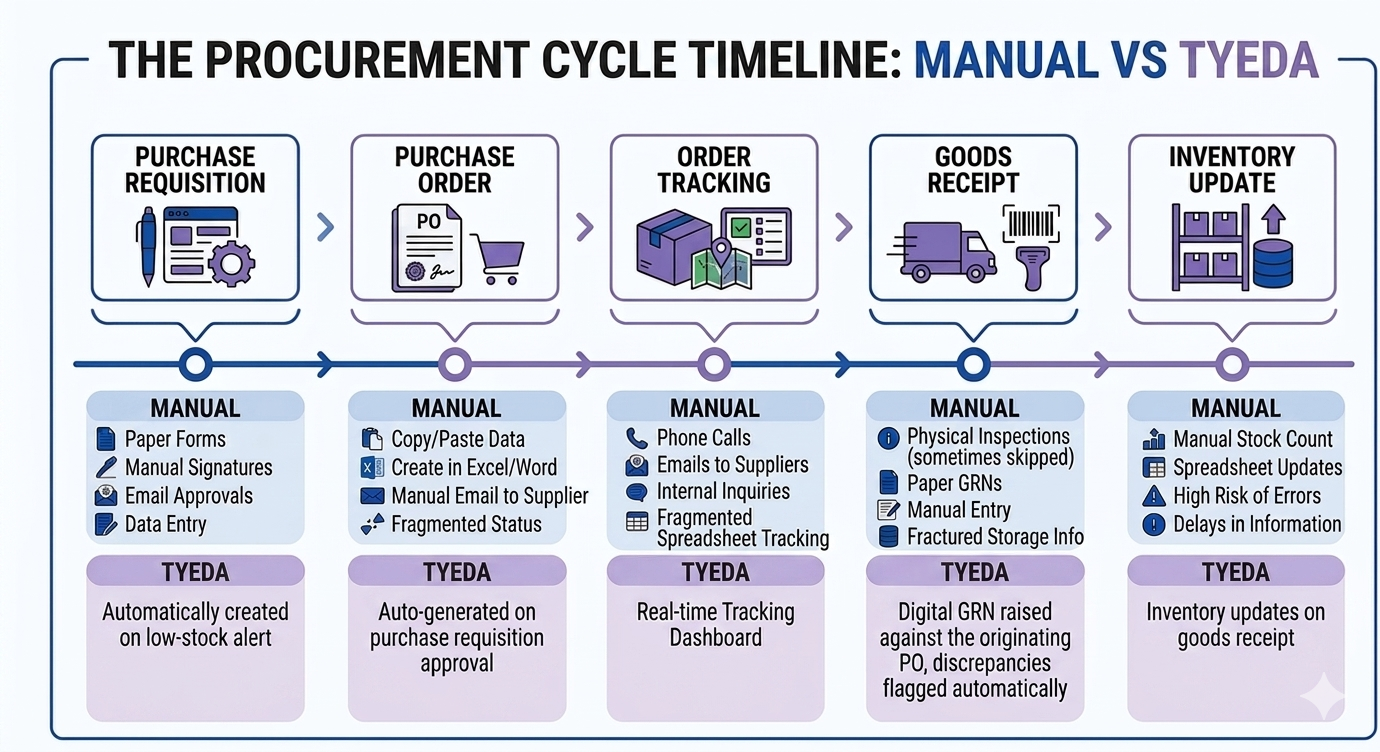
Manual procurement workflows compound over time with the same information being entered multiple times by different people across disconnected systems. The same order quantity appears in a purchase requisition, then a purchase order, then a goods receipt record, then an inventory update, each entered separately, each carrying the possibility of error. Approval chains managed over email add further delay, with no centralised procurement system capturing decisions or timestamps in one place.
The deeper consequence is timing. In 2024, teams that adopted procurement workflow automation saw a 40% drop in manual workloads (Planergy, 2025), yet most mid-sized Malaysian manufacturers have yet to close the gap between procurement status and production planning. When production planners schedule based on what was ordered rather than what has actually arrived and been confirmed, every decision carries a timing risk that only surfaces when it is already too late to recover without cost.
How Tyeda's Procurement Management System Addresses Each of These Gaps
Tyeda's procurement module covers the full cycle from requisition to goods receipt in one connected workflow, replacing the chain of WhatsApp messages, spreadsheet entries and email follow-ups that currently sit between a material shortage and a confirmed delivery.
When stock drops below a set threshold, a purchase requisition is created automatically and converted into a PO in a few clicks: supplier details, payment terms and line items pre-populated from your supplier database. From that point, every order has a live status. Your production planner can see what has been placed, what is in transit and what has been received, without asking anyone.
When materials arrive, a Goods Receipt Note (GRN) is raised against the original PO and inventory updates automatically. No separate stock entry. No timing gap between what landed on the floor and what the system shows. Production schedules get built on what has actually arrived, not what was ordered in the past few weeks.
Over time, every transaction builds your supplier intelligence without any extra work. Delivery times, on-time rates and total spend are calculated automatically from the data your team is already recording: visible on every supplier's profile the moment you need them.
Data from existing spreadsheets can be imported via CSV, so your records carry over, and the transition does not require rebuilding from scratch. Integrations with accounting and Enterprise Resource Planning (ERP) systems are on the roadmap as Tyeda grows with your operations. A factory can be live on basic PO creation and supplier management within the first week of onboarding, avoiding procurement delays and improving production efficiency.
Why Structured Procurement Management Matters More Than Ever for Malaysian Manufacturers
Global supply chain disruption continues to tighten supplier lead times and push input costs higher across Southeast Asia, pressures that hit hardest in factories with no structured visibility into procurement status (Deloitte, 2024). At the same time, Malaysia's NIMP 2030 target of 3,000 smart factories by 2030 assumes a level of operational data readiness that begins with procurement (MIDA, 2023). Manufacturers building connected procurement systems now will be leading their operations with a foundation that their next stage of growth depends on.
Tyeda is a manufacturing operations platform built for Malaysian mid-sized manufacturers, bringing procurement, production, quality and compliance into one unified real-time system that secures timely production. We are currently onboarding a limited number of manufacturers ahead of our full platform launch. Join the waiting list at landing.tyeda-technologies.com.
For more on how connected inventory management supports procurement outcomes, read: How Malaysian Manufacturers Can Eliminate Inventory Mismatch with Real-Time Inventory Tracking